


"I want my child to get a serious education in both English and science from an early age."
For such families, Laurus International School of Science is a school that's gaining attention. As one of the few international schools specializing in science (STEM), it operates preschools for children from 18 months old, primarily in the Minato ward.
At the same time, many parents have questions like,
"How much are the tuition fees?"
"It's not an Article 1 school, so are the university pathways secure?"
"What's the difference between Laurus and an IB school?"
In this article, ELT, experts in English and international education, will break down the school's reputation, tuition, curriculum, pathways, and admissions based on official, primary sources.
1. What is Laurus International School of Science? A Science-Focused International School
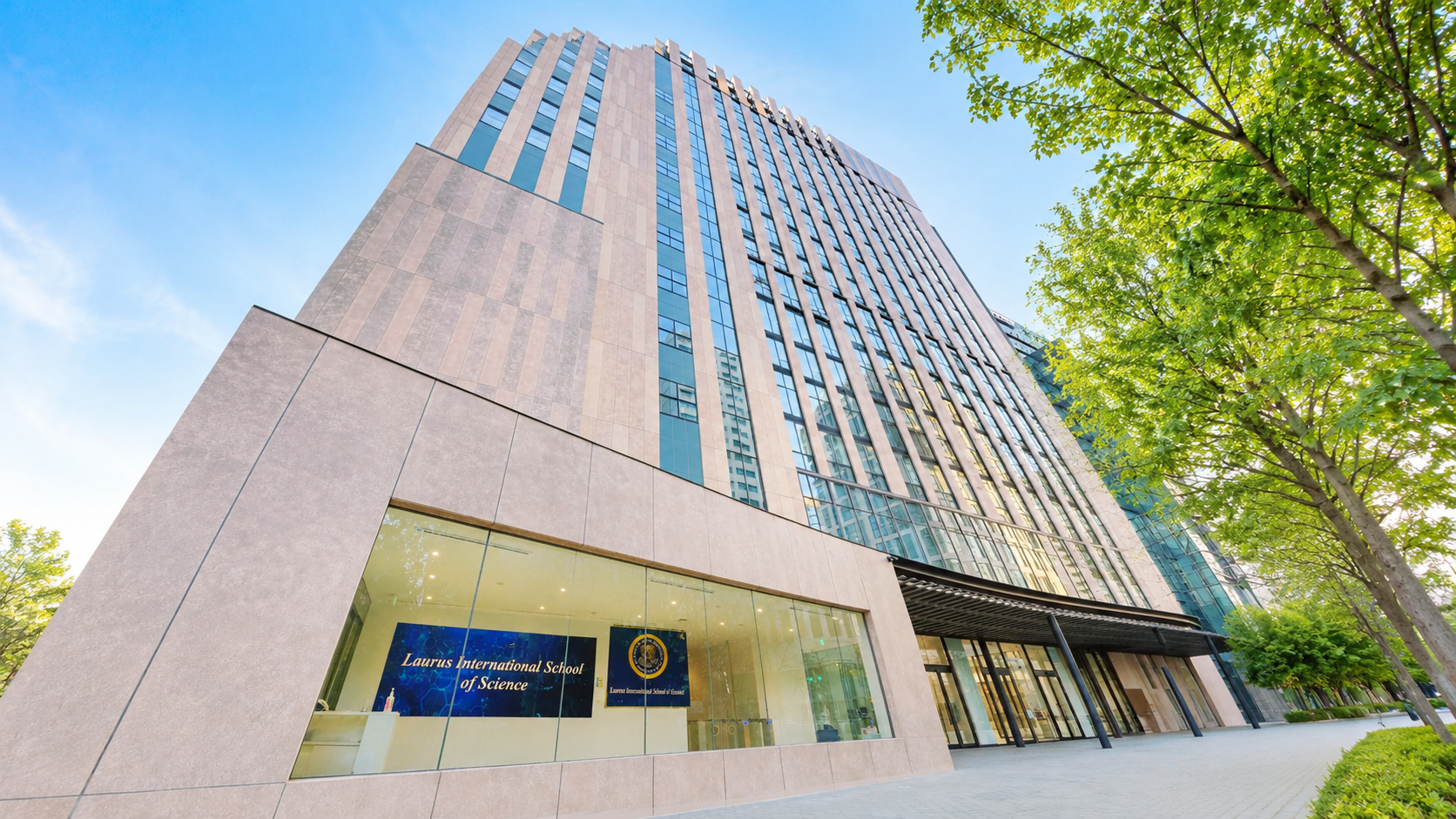
Founded in 2001, Laurus is a STEM-focused international school with nine campuses in Tokyo and Kanagawa. Centered on its proprietary STEM curriculum and the Cambridge International curriculum, it educates students from 18 months through high school.
Laurus began when its founders, Kiyomi Hioki (Chairman, MBA from Yale School of Management) and Mami Hioki (Founding Head of School, referred to as 'Gakuencho' on the Japanese page, graduate of Sophia University), established its predecessor school in 2001. The school will celebrate its 25th anniversary in 2026.
The school officially promotes itself as "the only science international school in Japan" (this is the school's own claim). It is also described by third-party education media as "one of the few science-based international schools in Japan," highlighting that STEM is central to the school's identity.
Regarding its size, the official homepage states over 1,400 students and over 300 faculty/staff, while another overview page mentions over 1,500 students and 320 staff, indicating some variation in the latest reported figures.
Let's clarify a common misconception: Laurus is not an IB (International Baccalaureate) school. It follows the Cambridge International curriculum. Its accreditation and membership status is as follows:
- CIS (Council of International Schools): Member. CIS distinguishes between 'membership' and 'accreditation.' Since Laurus officially announced it 'becomes member of CIS,' it is inaccurate to describe it as an 'accredited' school.
- Cambridge International: Listed on the official list of accredited schools in Japan (centre number not confirmed in public information).
- Round Square: Approved as a Candidate School in February 2026 (this should be distinguished from a full member).
Basic Information
Item | Details |
|---|---|
Official Name | Laurus International School of Science |
Founded | 2001 (25th anniversary in 2026) |
Ages | 18 months (Preschool) to High School |
Curriculum | Proprietary STEM (Laurus Innovator Program) + Cambridge International (IGCSE & A-Level) *Not an IB school |
Campuses | 9 locations (8 Preschool/Kindergarten + Shiba Campus) |
Student Body | Over 1,400 (Overview page states over 1,500) |
Accreditation & Memberships | CIS Member / Cambridge Accredited School / Round Square Candidate School |
9 Locations and Campuses
The Preschool & Kindergarten campuses are located in Aoyama, Bunkyo (opening July 2025), Jiyugaoka, Musashi-Kosugi, Musashi-Shinjo (Kawasaki City, Kanagawa; from 10 months old), Shirokanedai, Shinagawa (formerly Takanawa, relocating in 2026), and Tsukishima. Including the Shiba Campus (Shiba Kokusai Building 7-10F, 4-1-30 Shiba, Minato-ku, Tokyo; Ages 6-14), which houses the Primary, Middle, and High School divisions, there are a total of nine locations.
The Shiba Campus features a unique design with a theme for each floor: Ocean (7F), Planet Earth (8F), Singularity (9F), and Ad Astra (10F). It is equipped with an innovation lab, 3D printers, a 'Life Library' with plants, advanced science labs, and telescopes. Shiba Kokusai Junior and Senior High School (a separate legal entity and an Article 1 school) is located on the lower floors of the same building, and there are opportunities for interaction through club activities and events.
High School Development and Plans up to Year 12
For a long time, Laurus primarily consisted of Preschool to Middle School. However, in the 2025-2026 academic year, the school opened its Upper Secondary division with Year 10, establishing a cohesive educational system from 18 months through to high school.
The plan is to add one grade level each year, connecting to the Cambridge IGCSE (Years 10-11) and then A-Level (Years 12-13). Year 12, when A-Levels begin, is scheduled for approximately the 2027 academic year, with a gradual expansion to Year 13 thereafter. This means that while the course structure (up to A-Level Years 12-13) has been published, the actual opening of each grade level is still in progress. As of 2026, the high school is still in its expansion phase.
2. The Twin Pillars of STEM & Cambridge | The Laurus Innovator Program and IGCSE/A-Level
The core of Laurus is its twin pillars: the proprietary 'Laurus Innovator Program' and the Cambridge International curriculum. It builds a foundation of inquiry-based learning and entrepreneurship from 18 months, connecting to IGCSE from Year 10 and A-Level from Year 12.
The Laurus curriculum is composed of two main pillars: the proprietary STEM program, the "Laurus Innovator Program," and the Cambridge International curriculum.
The learning areas of the Innovator Program are based on six pillars: English, Math, Engineering & Technology, Science, Computer Science, and Entrepreneurship. The entrepreneurship education follows a cycle of 'Problem Solving → Prototype & Create → Pitch & Present,' while the after-school 'Frontiers Program' follows a cycle of 'Research → Experiment → Share.' Students work with mentors and experts, presenting their findings at school events and competitions. It's not just about 'learning science in English'; it's a design that builds inquiry, project-based learning (PBL), and an entrepreneurial mindset across age groups.
The structure at each stage is as follows:
- Preschool & Kindergarten (18 months–6 years): A full English immersion environment to foster social-emotional skills, intellect, and the foundations of scientific thinking.
- Primary School (6–11 years): Combines STEM concepts with the Cambridge Primary curriculum, where students work on independent projects.
- Middle School (11–14/15 years): Students collaborate with experts and mentors, extending their learning into the real world through field studies, robotics competitions, and international math contests.
One important point to note: Laurus's 'Primary' school begins with Year 2, not Year 1. Be sure to check the age and grade correspondence carefully to avoid misunderstanding.
The Cambridge qualifications at the high school level are as follows:
- IGCSE (Years 10-11): Compulsory subjects = English (0500/0510), Mathematics (0580), Biology (0610), Chemistry (0620), Physics (0625). Electives = Art & Design, Business Studies, Computer Science, Design & Technology, Economics, etc.
- A-Level (Years 12-13): Subjects such as Mathematics, Physics, Chemistry, Biology, Computer Science, Economics, Psychology, History, Geography, Law, English Literature, and Art are offered in four option blocks (it is unconfirmed if all subjects are currently offered, as the high school is still expanding).
Regarding languages, instruction is primarily in English. The Preschool/Kindergarten is a full English immersion environment, and families are encouraged to maintain their home language. In Primary and Middle School, there are some Japanese language classes, and at the A-Level, Japanese (JSL/JFL) is scheduled for three periods a week, so the school does not leave Japanese language learning entirely to the family.
For more information on how the British-style Cambridge qualifications work, please see the following article.
The British Curriculum (A-Level / IGCSE) Explained: The Power of Specialization for University Pathways
3. How Much is the Tuition? Total First-Year Costs by Campus and Age
Laurus's tuition is structured with a monthly fee for Preschool/Kindergarten (varying by campus) and an annual fee for Primary school and above. Based on the publicly available fixed costs alone, the estimated annual cost for Kindergarten is approximately ¥1.41 to ¥1.84 million, and for Primary school, it starts from about ¥2.84 million.
Laurus's tuition has a two-tiered structure: monthly fees for Preschool and Kindergarten that vary by campus, and annual fees for Primary school and above. For Preschool/Kindergarten, most campuses offer two courses: '5 days, 5 hours (9:00–14:00)' and '5 days, full day (8:30–18:00),' with separate fees for admission, educational operations, and (depending on the campus) facility maintenance.
Kindergarten Monthly Fees (Official, by Campus)
Campus | 5 Days, 5 Hours | 5 Days, Full Day |
|---|---|---|
Musashi-Shinjo (Lowest) | ¥97,000 | ¥135,000 |
Bunkyo / Jiyugaoka / Musashi-Kosugi | ¥121,000 | ¥168,000 |
Aoyama / Shinagawa / Tsukishima | ¥128,000 | ¥177,000 |
Shirokanedai (Highest) | ¥132,000 | ¥181,000 |
*Additional fees: Admission Fee ¥110,000–120,000 / Educational Operations Fee ¥85,000–90,000 / Facility Maintenance Fee ¥50,000 (depending on campus).
Estimated 'Minimum' First-Year Total Cost
The following is a minimum estimate of the total first-year cost, calculated using only the publicly disclosed fixed fees (costs for materials, uniforms, lunches, and school buses are not publicly available, so the actual total will be higher).
Division | Estimated First-Year Cost (Public Base) |
|---|---|
Kindergarten 5 Days, 5 Hours (Lowest, Musashi-Shinjo) | Approx. ¥1,409,000 |
Kindergarten 5 Days, 5 Hours (Highest, Shirokanedai) | Approx. ¥1,844,000 |
Primary School Regular Day | Approx. ¥2,841,000 |
Primary School Full Day | Approx. ¥3,371,000 |
Middle School (Lower Secondary) | Approx. ¥3,198,000 |
High School (Upper Secondary) | Approx. ¥3,318,000 |
There are also systems to reduce the financial burden. The Free Early Childhood Education and Care program applies to the Tsukishima, Shinagawa, Jiyugaoka, Musashi-Kosugi, and Musashi-Shinjo campuses, with the Bunkyo campus becoming eligible from January 2026. The school also mentions the availability of coupons through corporate welfare services (Benefit One, RISOL, eWEL). While it is announced that scholarships are available for Middle and High School, the eligibility, amount, and selection criteria are not publicly disclosed (the availability of sibling discounts is also unconfirmed in public information).
"Is it worth spending this much on an early education in English and STEM?" In ELT's private counseling sessions, we can help you objectively assess the cost-effectiveness based on your child's specific situation.
4. Admissions, Transfers, and Required English Proficiency
Laurus is accessible for students with zero English for its Preschool/Kindergarten programs, which do not have an entrance exam but require a trial lesson. From Primary school onwards, there are English and math assessments, and a certain foundational level of English is required.
The selection process at Laurus varies significantly by age and grade level.
- Preschool & Kindergarten: As a rule, there is no entrance exam for new students (a trial lesson is mandatory). In Kindergarten, there is a check of English reading, writing, and conversation skills.
- Primary & Middle School (Lower Secondary): Assessments in English and Math.
- Middle & High School: An English essay is added to the above assessments.
The application fees are: Preschool ¥2,200 / Kindergarten ¥10,000 / Primary ¥25,000 / Secondary ¥35,000. Notification of results takes approximately 2 weeks to 1 month.
English proficiency is not required for parents, and families from non-English speaking backgrounds are welcome to apply. However, communication from the school is primarily in English from the Primary years onwards, and students are expected to have the necessary English and math skills to keep up with their grade level upon entry (the English benchmark for Years 2-3 is roughly Eiken Grade 3 to Pre-2). Individual ESL support is available for mid-year transfer students.
Key application points: admission to Primary Year 2 is for children aged 6 or older as of September 1st. For the 2026 academic year, the Year 2 application deadline was September 26, 2025, with the assessment on October 4th. The transfer deadline for High School Year 10 was October 31st; after this date, only students who have previously studied IGCSE at their former school are eligible. As mentioned, the high school is expanding annually, so transfers depend on grade progression and curriculum alignment.
5. [Important] Not an Article 1 School | The Reality of Academic Pathways and Cambridge Outcomes
Laurus is not an Article 1 school, meaning that graduating from its primary division does not confer a Japanese elementary school graduation qualification. The main academic pathway is Cambridge IGCSE → A-Level → overseas universities or the English-based tracks of Japanese universities.
The most critical point to consider about Laurus is that it is not an "Article 1 school." The Primary School FAQ explicitly states, "Graduating from Laurus Primary School does not grant a Japanese elementary school graduation qualification," and "Some of our students are also registered at and attend public elementary schools, but the policies vary by municipality."
As a general rule under the system defined by MEXT (Ministry of Education, Culture, Sports, Science and Technology), sending a child with Japanese nationality to an international school not recognized as an Article 1 school does not fulfill the compulsory education obligation stipulated in Article 17 of the School Education Act (Article 17 does not apply to guardians of foreign national students). Therefore, it is essential for families with Japanese nationality to confirm the details regarding compulsory education, school registration (gakuseki), and potential transfers to public schools with their local municipal office.
The 'Outcomes' Envisioned by Laurus
Laurus clearly outlines its intended outcome pathway: Cambridge IGCSE → A-Level → Overseas Universities / Japanese Universities (English-based/Returnee tracks). The A-Level program incorporates the IPQ, IELTS, Japanese (JSL/JFL), and a University Preparation Course, designed to prepare students for both English-speaking universities and universities in Japan. A college counselor specializing in US university applications (Vince Ricci) regularly provides information on IGCSE grades, A-Levels, the UCAS system, and the importance of extracurricular activities.
High School University Placement Record Reflects Support for External Students
This point is easy to misinterpret, so we will state it clearly. The officially published '2025-2026 College Results' (including University of Edinburgh, University of Melbourne, Boston University, UC San Diego, University of Michigan, McGill University, UBC, University of Toronto, Keio University SFC, etc.) are explicitly stated by the school to be the results of 'non-Laurus students.' This is a list of universities where external students, supported by Laurus's college counseling, were accepted. The university placement record for Laurus's own students has not yet been established (as of April 2026, the highest grade level is Year 10). Please be mindful of this distinction when reading articles or attending information sessions.
Pathways 'From' Laurus
Transitions from Laurus to other schools can be summarized as follows:
- After graduating from Preschool or Kindergarten, most students transition internally to Laurus Primary School, while some families choose public or private elementary schools.
- From Primary school onwards, because Laurus uses the Cambridge International qualifications (IGCSE/A-Level), which are accepted by over 10,000 schools in 160 countries, it is advantageous for students who may need to transfer to other international schools or Cambridge-system schools in Japan or abroad.
- However, a specific list of destination schools for students leaving Laurus is not officially published.
- With the establishment of the high school from 2025, students now have the option to continue at Laurus through to A-Level instead of transferring to another school.
6. Reputation and Comparison with KIST, YIS, Aoba (IB Schools), and Mita International
Laurus is a good fit for families who want their children to learn English and STEM at a fluent, daily-use level from an early age and are aiming for overseas universities via the Cambridge pathway. Families seeking the IB Diploma or prioritizing the stability of a Japanese school registration may find other schools to be better options.
Reputation (Separating Facts from Opinions)
Publicly available reviews are not numerous, and the sample size is limited. Based on what is available, the perceived strengths include its strong focus on science (STEM), the use of specialist teachers, the fact that Primary and Secondary teachers hold teaching licenses, and the full English immersion environment that helps children become proficient quickly (according to parent testimonials).
On the other hand, concerns include the high tuition fees and the lack of transparency regarding additional costs for materials, uniforms, lunches, and school buses; the fact that, as the school itself admits, it does not grant a Japanese elementary school graduation qualification; and that the high school is still expanding, with no university placement record for its own graduates yet. These are all points to confirm during a school tour or individual consultation (note that reviews reflect personal experiences and may not be representative).
Comparison with Other Schools
Item | Laurus | KIST | YIS | Aoba | Mita International |
|---|---|---|---|---|---|
Type | International (STEM-focused) | International | International | International | Article 1 School (JHS/HS) |
Curriculum | Proprietary STEM + Cambridge IGCSE/A-Level | IB (PYP+IGCSE+DP) | IB (PYP/MYP/DP) | IB Continuum (+CIS/NEASC) | Domestic + International (MITA diploma/AP/W. Australia) |
Outcomes/Pathways | Cambridge → Overseas Uni / English Track | IB DP | IB DP | IB DP | Domestic + Overseas Uni |
Japanese School Status | Not an Article 1 school | Not an Article 1 school | Not an Article 1 school | Not an Article 1 school | Article 1 school (stable registration) |
Features | Science focus, from 1.5 years old | Strong DP results | Long-established IB school | IB + multiple accreditations | School status + international pathways |
[Expert Advice on Choosing a School]
- Families for whom Laurus is a good fit: Those with a strong interest in science and technology who want their children to use English as a daily language from an early age. They value inquiry-based learning and entrepreneurship and are considering overseas universities via the Cambridge pathway.
- Families for whom other schools may be a better fit: Those aiming for the IB Diploma (→KIST, YIS, Aoba) / Those who prioritize the stability of a Japanese school registration and also want to keep options open for domestic university entrance (→ Article 1 schools like Mita International) / If the sole goal is STEM, an after-school program might be sufficient.
Mita International Science Academy Complete Guide: Tuition, Entrance Exam Difficulty, IC/ISC/MSTC, DDP/AP, and University Admission Results Explained [2026 Edition]
For a broader comparison of international schools in Japan, please refer to this article.
Tokyo & Greater Tokyo Area International Schools Guide 2026: A Complete Comparison of Curriculums, Tuition, and Admissions
Conclusion: Balancing Early Investment in STEM & English with the Realities of University Pathways
Laurus International School of Science is a distinctive international school that places science (STEM) at its core. Its full English immersion environment from 18 months, the Cambridge International curriculum, and the now-complete K-12 system established in 2025 make it an attractive option for families who want to nurture a passion for scientific inquiry.
At the same time, the reality that the high school is still expanding and has yet to establish a university placement record for its own graduates is a crucial factor that families should consider in line with their long-term goals.
ELT provides support from building a foundational English ability to preparing for Cambridge qualifications (IGCSE/Eiken) and designing academic pathways for overseas universities or returnee admissions.
"Is a STEM and English environment right for my child?"
"Working backward from future university goals, what should we be preparing now?"
If you have these concerns, please don't hesitate to consult with ELT.


![Mita International Science Academy Complete Guide: Tuition, Entrance Exam Difficulty, IC/ISC/MSTC, DDP/AP, and University Admission Results Explained [2026 Edition]](/_next/image?url=https%3A%2F%2Fstorage.googleapis.com%2Felt-microcms-ai-automator-og-images%2Fcolumns%2Fmita-international-school-review%2Fen.png%3Fv%3D1775748368953&w=3840&q=75)


