


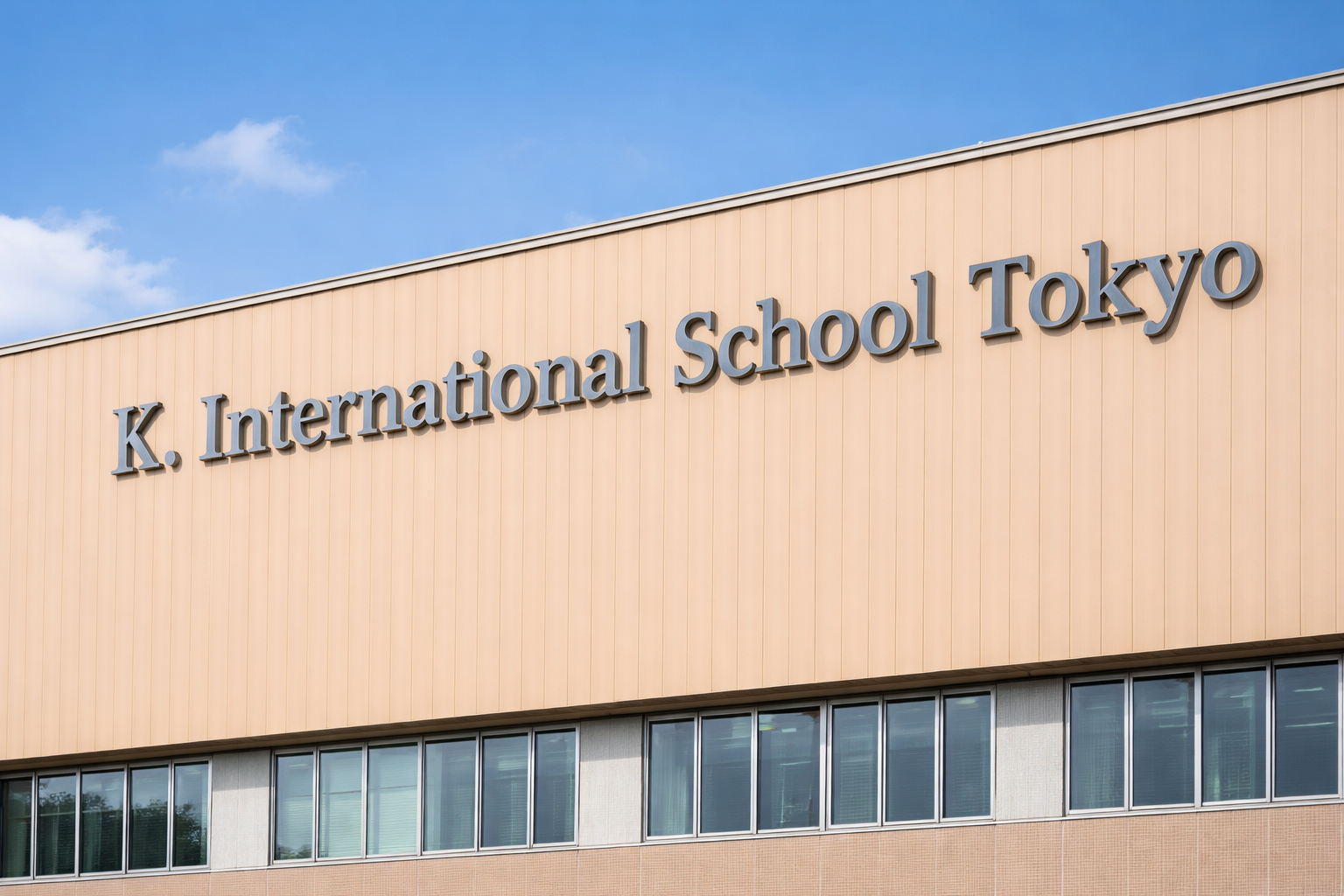
Known as "the school with the highest IB scores in Japan," K International School Tokyo (KIST) boasts outstanding university placement records. However, it is also surrounded by rumors of being a "spartan" institution, known for its rigorous, study-focused environment.
Setting itself apart from the typical "liberal and nurturing" image of international schools, what is KIST really like? And more importantly, is it the right fit for your child?
In this article, we provide a thorough analysis based on the latest 2026 data, covering everything from KIST's admission difficulty and tuition fees to its incredible university placements and the "real school culture" that parents are most curious about.
1. Why Does KIST Have the Highest IB Scores in Japan?
KIST's most defining feature is its unparalleled academic performance. The data from the 2024-2025 academic year confirms that its results are worthy of the "Number One in Japan" title.
Phenomenal IB Score Results
In the final examinations of the International Baccalaureate (IB) Diploma Programme, KIST consistently maintains world-class results.
- Difference from World Average: While the global average score is around 30, KIST's average is between 41.5 and 42.0 (2024-2025 results). This is an astonishing figure, more than 10 points above the world average.
- Global Ranking: The school consistently ranks among the top, having achieved 4th place in global IB school rankings.
- High Number of Perfect Scores: While only about 0.1-0.3% of students worldwide achieve a perfect score of 45, in some years, approximately 25% of KIST graduates have earned a perfect score.
Why Are the Scores So High?
Behind these results is a thoroughly "structured curriculum" that begins in the early years. KIST places a strong emphasis not just on "inquiry-based learning" but also on mastering fundamental academic skills (especially in math and English), building a solid foundation from elementary school to prepare students for high scores in the IBDP (Grades 11-12).
2. Latest University Placements: A Passport to Top Global Universities
High IB scores directly translate into acceptances at the world's most prestigious universities. The destinations of KIST graduates are a testament to their status as global elites.
International University Acceptances (2020-2025)
Approximately 90% of graduates matriculate to universities outside of Japan.
- United States: Numerous graduates have been accepted to Ivy League and equivalent top-tier universities, including Harvard University, Stanford University, Princeton University, Cornell University, and Brown University.
- United Kingdom: The school consistently sends students to universities that are regulars in the world's top 10 rankings, such as the University of Oxford, the University of Cambridge, and Imperial College London (ICL).
Placements in Japanese Universities and Medical Schools
In recent years, placements in top Japanese universities and medical schools have also gained attention.
- Japanese Universities: The University of Tokyo (with scholarship), Waseda University, Keio University, ICU, etc.
- Medical Schools: Graduates have also been accepted into medical schools both in Japan and abroad, including Tokyo Medical and Dental University (School of Medicine), Hiroshima University (School of Medicine), and Trinity College Dublin in Ireland (Medicine).
The school maintains a good balance between STEM and humanities, enabling students to pursue diverse paths according to their aspirations.
3. Admissions and Transfer Difficulty & Preparation
KIST's admissions process is often described as "wanting to get in, but not being able to." Its difficulty is increasing year by year.
Admissions Content and Required Levels
The entrance examination consists of written tests in English (Reading/Writing/Interview) and Math, as well as an interview.
- Emphasis on Math: A distinctive feature of KIST's admissions is the difficulty of the math section. A level higher than the corresponding grade is expected, and placement tests are frequently conducted even after enrollment.
- English Proficiency: For higher grades, near-native proficiency becomes essential. While an English support program (LEAP) is available, students are generally not accepted into it from Grade 8 onwards. A level of English sufficient to keep up with mainstream classes is required.
The Limits for Transfer Students
Mid-year transfers are possible, but the reality is very challenging. Grade 10 is generally considered the practical cut-off. Transfers into Grade 11 (the start of the IBDP) are strictly limited to the end of September, and transferring into Grade 12 is generally not possible unless there are special circumstances, such as a perfect curriculum match.
The Crucial "Parent Interview"
The parent interview is a hidden but critical component of the KIST admissions process. The school rigorously assesses whether the family is prepared to fully cooperate with KIST's demanding educational philosophy.
- What to Expect: "Why KIST?" "Do you align with the school's mission?" "How will you support your child's learning at home?"
- Unfavorable Answers: Vague responses like "I want my child to have a carefree school life" or "I just want them to learn English" will be seen as a mismatch with the school's academic focus and can lead to rejection.
4. "Spartan? A Prison?" The Real School Culture and Student Life
You may have seen reviews describing KIST as "spartan" or "like a prison." Is there any truth to these claims?
Strict Discipline
In short, the discipline at KIST is significantly stricter compared to other international schools.
- Uniform: Blazers are mandatory, and improper wear is strictly forbidden. Hair dyeing and piercings are also prohibited, creating an atmosphere similar to a traditional Japanese private college-preparatory school.
- Punctuality: The school is strict about time management, and repeated tardiness results in penalties.
- Smartphone Restrictions: The school creates an environment that thoroughly eliminates distractions to learning, for example, by establishing "phone-free study halls" on campus.
Academics Over "Freedom"
Families expecting a "free and vibrant school life" like that at the American School in Japan (ASIJ) will likely experience a significant culture shock. There are fewer long camps or flashy events; resources are concentrated on academics. However, this should not be seen as an environment where students are "forced to study," but rather as an environment where highly motivated students can challenge and inspire one another.
Are the Facilities "Modest"?
While there were rumors about the facilities being old, they were significantly improved after a major renovation in 2019. Although it doesn't have a sprawling campus, it is equipped with state-of-the-art facilities essential for learning, such as science labs, a design room with 3D printers, and a well-stocked library. It may not have a "luxurious cafeteria or a heated swimming pool," but this is arguably reflected in its more moderate tuition fees.
5. Tuition and Cost-Effectiveness
Despite its outstanding university placement record, KIST's tuition is considered "reasonable" compared to more established international schools.
Estimated Fees (2024-2025 Academic Year)
- Application/Registration Fee: JPY 500,000
- Annual Tuition: Approx. JPY 2.4 million - 2.8 million (varies by grade)
- Facilities Fee, etc.: Approx. JPY 300,000 - 450,000
- Total First-Year Payment: Approx. JPY 3.2 million - 4.5 million (varies by grade)
Considering that schools like ASIJ and the British School in Tokyo (BST) have annual fees exceeding JPY 3 to 4 million, KIST's cost-effectiveness in terms of the "results" it delivers—namely, its IB scores—is arguably the best in Japan. However, additional costs for items like personal laptops (e.g., MacBook), uniforms, and bus fees should be factored in, requiring careful financial planning.
Conclusion: KIST is "Selective" but a "Powerhouse Prep School"
K International School Tokyo (KIST) is not a school for everyone. It is likely not the right choice for families who want their children to "have fun playing in English" or "develop their individuality freely" (for that, schools like ASIJ or YIS might be a better fit).
However, for families with the following goals, it offers an unparalleled environment:
- You want your child to achieve world-class academic excellence.
- You are serious about aiming for universities like Harvard, Oxford, or the University of Tokyo.
- You are committed to supporting your child's learning at home.
- You want your child to learn the value of diligence (hard work) in a disciplined environment.
It may be more accurate to think of KIST not just as an international school, but as a world-class, academically-driven preparatory school that teaches in English. For families who can view its rigor as an opportunity for growth, KIST will undoubtedly help your child reach their fullest potential.
Check the latest admissions information on the official KIST website (Admissions details are subject to frequent changes, so please always check the official site.)
