


International School of the Sacred Heart (ISSH), located in Hiroo, Shibuya Ward, Tokyo, is a Catholic, US-style international school for girls, founded in 1908. Serving ages 3 to 18, it operates as a coeducational institution in Kindergarten (K3-K5) only, with Grades 1-12 as an all-girls school. As a member of the Sacred Heart Sisters network of 160+ schools worldwide, ISSH enrolls approximately 580 students from over 50 countries.
The school offers 24 Advanced Placement (AP) courses, with a 2025 AP average score of 4.27/5, a 93% pass rate (score 3+), and 301 examinations taken—top-tier performance among US-style international schools. The Class of 2023-2025 acceptances include Harvard, Yale, Brown, Cornell, Dartmouth, UPenn, Cambridge, and UCL, among other world-leading universities. Annual tuition is approximately ¥3.71–4.03 million (2026-2027 estimate), with a distinctive policy that students holding only Japanese nationality may apply only to Grades 10-12.
"I want to seriously pursue admission to a top US Ivy League university"
"I seek depth in AP-based specialization"
"I'm drawn to the culture of a 100+ year heritage institution"
This article is prepared by ELT, which has supported numerous ISSH acceptances, drawing on official data and proprietary teaching expertise to provide comprehensive insight into ISSH and the pathway to acceptance.
For details on Seisen International School, please refer to the article below.
The Complete Guide to Seisen International School: Tuition, IB Results, Comparison with Sacred Heart, and Admission Strategies [2026 Edition]
1. International School of the Sacred Heart (ISSH) — Core Information in 5 Minutes
International School of the Sacred Heart is Japan's oldest international girls' school, founded in 1908 in Hiroo, Tokyo. Established by the Society of the Sacred Heart, a congregation founded in France in 1800, ISSH has been a member of the global network of 160+ sister schools and has led international education for girls in Japan for over 115 years.
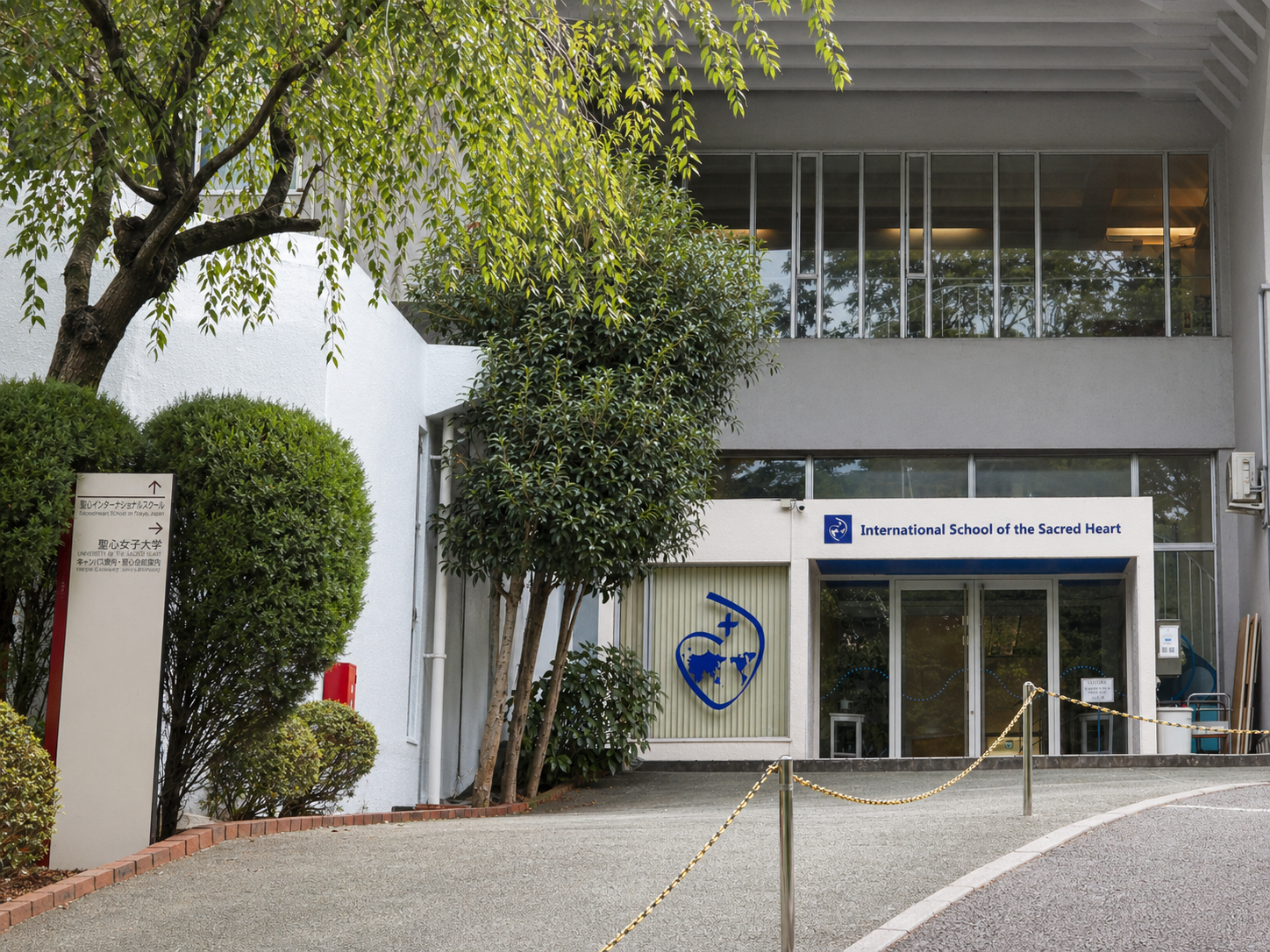
School Essentials
Item | Details |
|---|---|
Official Name | International School of the Sacred Heart |
Founded | 1908 |
Location | Hiroo, Shibuya Ward, Tokyo |
Grade Range | Kindergarten (age 3) to Grade 12 (age 18) |
Coeducational / Single-Sex | Coeducational for Kindergarten (K3-K5) only; Grades 1-12 all-girls |
Enrollment | Approximately 580 students (K-12 total) |
Nationalities Represented | Over 50 |
Curriculum | K-12 in-house curriculum + Advanced Placement (AP) |
Language of Instruction | English (all classes taught in English) |
Accreditations | NEASC, CIS, Japanese Ministry of Education |
Founding Organization | Society of the Sacred Heart (established in France, 1800) |
Sister School Network | Network of Sacred Heart Schools (160+ schools worldwide) |
"Oldest in Japan" Heritage and Modernization
ISSH's 115+ year history mirrors the history of girls' international education in Japan.
- 1908: Founded by the Society of the Sacred Heart—one of Japan's earliest girls' international schools
- Pre-, During, and Post-War: Continued operations through wartime disruption
- Since 1908: Over 100 years supporting global education in Japan, primarily serving families of expatriates
- Today: AP adoption, expansion to 24 courses, digital education integration—a heritage institution that continuously evolves
"Over 100 years of heritage + modern US-style education" is one of ISSH's defining characteristics.
Shared Campus with Sacred Heart University
ISSH shares the same campus with Sacred Heart University, Tokyo (University of the Sacred Heart), which provides several advantages:
- Middle-to-University Integration: Access to university facilities and special lectures by university faculty
- Recommended Admission: Eligible for school-recommended admission to Sacred Heart University
- Role Models: University students on campus serve as mentors and future-oriented examples
Sacred Heart University is among Tokyo's leading heritage women's universities and maintains international orientation through its English-language degree program. Fostering female leadership through "an integrated Sacred Heart network spanning secondary and university education" is a structurally distinct value unique to ISSH.
2. ISSH Curriculum — Anglosphere In-House Curriculum + AP
ISSH's curriculum structure is not the International Baccalaureate (IB), but rather a "school-designed Anglosphere curriculum + AP". This represents a fundamentally different educational philosophy from Seisen's IB-integrated approach and is the most critical distinction when choosing between the two schools.
K-12 In-House Curriculum Structure
ISSH operates a proprietary, school-designed curriculum across K-12, synthesizing educational standards from English-speaking countries (Anglosphere): the United States, United Kingdom, Canada, and Australia. Rather than adopting external frameworks like the IB or Cambridge IGCSE, ISSH takes responsibility for curriculum design aligned with Sacred Heart Goals—the school's educational philosophy.
Advanced Placement (AP) in Upper Grades
In Grades 11-12 (or from Grade 10 with acceleration), students study primarily College Board Advanced Placement (AP). AP's defining characteristics are:
Feature | Details |
|---|---|
Number of Courses Offered | 24 courses (2025-26 academic year) |
Enrollment Model | Individual course selection on a year-by-year basis (not a required package like IB) |
Scoring | 5-point scale (1-5). Score 3+ indicates "pass"; 4-5 indicates "advanced" |
University Recognition | Recognized by leading universities worldwide, particularly US institutions |
University Credit | Often qualifies for college credit at US universities |
The Complete Guide to AP (Advanced Placement) [2026 Edition] | Subject List, Exam Dates, Scores, and College Credit
Essential Differences Between IB and AP
Understanding the fundamental differences between IB and AP is essential for parents choosing between ISSH and Seisen.
Aspect | AP (ISSH) | IB Diploma (Seisen) |
|---|---|---|
Structure | Individual course-based standardized tests | Package of 6 courses + TOK + EE + CAS |
Flexibility | High (students may take more courses in subjects of strength) | Low (one course per group of 6 mandatory) |
Specialization | Deep expertise in individual subjects | Balanced proficiency across disciplines |
University Alignment | Optimized for US universities | Recognized by universities worldwide |
Assessment | Standardized exam (once per year) | Standardized exam + internal assessment + Extended Essay |
Choose AP (ISSH) if you aim to cultivate depth in specific subjects and pursue top US universities; choose IB (Seisen) if you prioritize balanced development while building credentials recognized internationally.
A Deep Dive into the World's Top 3 Curricula | IB, A-Level, AP: Which One is Right for You?
AP Capstone — ISSH's Distinctive Research Program
ISSH offers the AP Capstone Diploma program, combining "AP Seminar" and "AP Research"—a research initiative equivalent to the IB Extended Essay (EE).
- AP Seminar (Grade 11): Students learn research methodology and argumentation
- AP Research (Grade 12): Students produce a 5,000-word independent academic thesis
AP Capstone addresses the absence of IB at ISSH and is valued equally to IB Diploma by top US universities.
3. Latest 2025 AP Results and Three-Year Track Record
ISSH's AP performance demonstrates consistent excellence above global averages over three consecutive years.
Three-Year AP Results
Year | Total Exams Taken | Average AP Score | Pass Rate (Score 3+) | Perfect Score Rate (Reference) |
|---|---|---|---|---|
2025 | 301 exams | 4.27 / 5 | 93% | High |
2024 | 253 exams | 3.8 / 5 | 86% | – |
2023 | 238 exams | 3.95 / 5 | 90.3% | – |
Source: ISSH High School Profile
What These Numbers Mean
Three consecutive years of AP averages between 3.8 and 4.27, with pass rates between 86% and 93%—this demonstrates institutional teaching excellence.
Notably, 2025's 4.27/5 is significant. Since the US national AP average is approximately 2.9-3.0, ISSH's students score approximately 1.3 points above the national average. This is comparable to top-tier US private schools.
Continuous Expansion of AP Offerings
ISSH's ongoing increase in AP courses is noteworthy:
Year | AP Courses Available |
|---|---|
2023-24 | 22 courses |
2024-25 | 23 courses |
2025-26 | 24 courses |
This trajectory reflects the school's commitment to AP and expanding options for specialized academic development.
Growth in Exam Volume
The rise from 238 to 253 to 301 total exams indicates an increase in the average number of AP courses per student, reflecting higher academic ambition among the student body.
The school officially states its AP performance exceeds that of international peers, a claim supported by these metrics.
4. University Admissions Outcomes — Placement at US Ivy League and British Oxbridge
ISSH's most distinctive feature in university admissions is consistent placement of students across all eight US Ivy League universities.
Note on Public Admissions Data
ISSH publishes a "2023-2025 College Acceptances" list but does not disclose matriculation data (actual enrollment) by country or university, unlike Seisen. Therefore, acceptance counts differ from actual enrollment figures. Nevertheless, the universities represented on the acceptance list reflect the school's selectivity and reputation.
Acceptances to US Ivy League and Top Private Universities
University | Category |
|---|---|
Harvard University | Ivy League |
Yale University | Ivy League |
Brown University | Ivy League |
Cornell University | Ivy League |
Dartmouth College | Ivy League |
University of Pennsylvania | Ivy League |
Johns Hopkins University | Top U.S. Private Universities (Medicine & Research) |
Georgetown University | Top U.S. Private Universities (International Relations) |
Tufts University | Top U.S. Private Universities (Liberal Arts) |
New York University | Top U.S. Private Universities |
Northeastern University | Top U.S. Comprehensive Universities |
Consistent admissions from 6 of the 8 Ivy League schools, excluding Princeton and Columbia—this represents one of Tokyo's most impressive track records for girls' schools aiming toward top U.S. universities.
Top U.S. Public Universities and Prestigious West Coast Institutions
University | Comment |
|---|---|
UC Berkeley | Top-tier public university, strong in STEM and business |
UCLA | Most selective California State University |
University of Southern California (USC) | Prestigious West Coast private institution |
University Admissions to the UK, Canada, and Japan
Region | University |
|---|---|
UK | Cambridge, UCL, Edinburgh, Durham, King's College London, Warwick |
Canada | McGill, UBC, Toronto, Waterloo, Western |
Japan | University of Tokyo, Keio, Sophia, Waseda, ICU, Tsukuba, Nagoya |
Notable is the confirmation of both admissions to Cambridge University and University of Tokyo. Rather than focusing solely on the United States, ISSH positions itself as a school that is U.S.-focused but strong across multiple regions.
Medical and STEM Program Examples
University | Country | Field |
|---|---|---|
Semmelweis University of Medical Sciences | Hungary | Medicine |
University of Debrecen | Hungary | Medicine |
University of Pécs | Hungary | Medicine |
University of Szeged | Hungary | Medicine |
HKUST | Hong Kong | Engineering & Science |
Purdue University | United States | Engineering |
Rochester Institute of Technology (RIT) | United States | Technology |
The placement of multiple students in Hungarian medical programs reflects ISSH's strong awareness of European English-language medicine pathways.
Recommended School Entrance (Designated School Recommendation) to University of the Sacred Heart
One of ISSH's major university pathways is Recommended School Entrance (Designated School Recommendation) to University of the Sacred Heart, Tokyo. University of the Sacred Heart shares its campus with ISSH, and longstanding coordination between the two institutions has been established over many years.
While specific recommendation allocations and faculty-based quotas are not disclosed in public materials, ISSH graduates have historically benefited from this arrangement as a reliable pathway to Japan's traditional women's universities.
5. [Critical] University of the Sacred Heart vs. Seisen—Six Essential Distinctions
For parents considering Catholic girls' international schools, the paramount question is "Should we choose University of the Sacred Heart or Seisen?" Both are Tokyo's leading girls' international schools, yet there are six essential differences spanning curriculum structure to admissions systems.
Comparison Table
Distinction | ISSH (University of the Sacred Heart) | Seisen |
|---|---|---|
1. Curriculum | Anglosphere in-house curriculum + AP (24 subjects) | IB continuum (PYP/MYP/DP) + IGCSE option |
2. Academic Achievement Metrics | AP average 4.27/5, 3+ represents 93% (2025) | IB average 35 points, pass rate 97.7% (2025) |
3. University Placement Trends | Strong depth in U.S. Ivy League and top private universities | Geographic diversity (Japan & Asia 39%, U.S. & Canada 35%, UK & Europe 14%) |
4. Admissions Accessibility for Japanese Families | Grade 9 and below requires the applicant or one parent to hold non-Japanese citizenship | Pathways available for applicants with 2+ years overseas residence |
5. School Culture | 1908 founding tradition / structured PA-PAC-Homeroom Parent three-tier system / Hiroo location | Warm, welcoming atmosphere / compact enrollment / Setagaya location |
6. Religious Education | Delivered through Goals / Values / Spirituality framework | Required Religion classes, weekly Mass, daily prayer |
Distinction 1: Curriculum—AP-Based vs. IB Continuum
ISSH employs an "Anglosphere curriculum model + 24 AP subjects" designed to allow students to deepen expertise in their stronger subjects. Conversely, Seisen follows a"PYP-through-DP IB continuum design" emphasizing inquiry-based learning.
If your goal is "targeting U.S. universities while developing deep specialization in strength areas," ISSH is the fit. If you prioritize "balanced overall development and inquiry-based learning while considering universities worldwide," Seisen aligns better.
Distinction 2: How Academic Achievement Is Measured
Both schools rank at the global apex, but their assessment metrics differ.
- ISSH: AP average 4.27/5, with 93% achieving 3+ (2025; 301 exams)
- Seisen: IB average 35 points, 97.7% pass rate, 8 students scoring 40+ (2025; 43 students)
AP measures "subject-specific mastery," while IB assesses "holistic intellectual capability and inquiry depth." The visible strengths differ in form, requiring family consideration of educational priorities.
Distinction 3: University Placement Trends—U.S. Ivy Focus vs. Geographic Diversity
ISSH shows significant strength in placement at U.S. Ivy League universities such as Harvard, Yale, Brown, Cornell, Dartmouth, and UPenn. By contrast, Seisen's Class of 2025 shows Japan 35%, USA 21%, Canada 14%, UK 8%—a geographically distributed pattern.
If "seriously pursuing top-tier U.S. private universities" is your priority, ISSH is optimal. For "global flexibility across placement destinations," Seisen excels.
Distinction 4: Admissions Accessibility for Japanese Families
This is the most operationally significant difference.
ISSH's official Admissions Policy requires that applicants Grade 9 and below have either the applicant or one parent hold non-Japanese citizenship. Japanese-only families may apply only at Grade 10-12.
Seisen, meanwhile, maintains pathways for Japanese permanent residents, including those with 2+ years overseas residence or international school transfer backgrounds. For Japanese resident families, Seisen presents a more accessible admissions structure.
Distinction 5: School Culture—Tradition vs. Intimate Community
Each school's character reflects its founding and setting.
- ISSH: 1908 founding heritage. Organized parent community through PA-PAC-Homeroom Parent three-tier structure. International Hiroo location
- Seisen: 1962 founding. Approximately 700 students with "warm, accessible atmosphere" and parent community centered on close relationships
Preference for "historic tradition and structured community" points to ISSH; desire for "intimate, welcoming environment" aligns with Seisen.
Distinction 6: Religious Education—Values Framework vs. Explicit Coursework
Both are Catholic schools, yet religious education operates distinctly.
- ISSH: Operates through Sacred Heart Goals / Values / Spirituality framework. Values 1 credit required for graduation. Welcomes multiple faith traditions; Junior School assemblies include prayers led by students of diverse religious backgrounds
- Seisen: Required Religion classes, weekly Mass, daily prayer as explicit curriculum components. Religious and Cultural Exploration 3 credits required
ISSH presents religious education more as values-formation and community-building, which may feel more accessible to non-Christian families. Seisen integrates Catholic practice directly into its academic structure.
Detailed analysis of Seisen can be found in the article below.
The Complete Guide to Seisen International School: Tuition, IB Results, Comparison with Sacred Heart, and Admission Strategies [2026 Edition]
6. Complete Tuition Breakdown 2026–2027 Academic Year
ISSH tuition is positioned in the mid-to-upper range among Tokyo's international schools.
Annual Tuition (2026–2027 Academic Year—Projected)
Grade Level | Annual Tuition |
|---|---|
K3–K4 | ¥3,710,000 |
K5 | ¥3,830,000 |
Grade 1–8 | ¥3,920,000 |
Grade 9–11 | ¥3,940,000 |
Grade 12 | ¥4,030,000 |
One-Time Enrollment Fees
Item | Amount |
|---|---|
Application Fee | ¥30,000 |
Registration Fee | ¥300,000 |
Capital Levy (Educational & Building Development) | ¥600,000 |
Total Initial Fees | ¥930,000 |
First-Year Total Cost Projection
For new enrollment in Grades 1-8, the minimum baseline is as follows.
Item | Amount |
|---|---|
Annual Tuition (Grades 1-8) | ¥3,920,000 |
Application Fee | ¥30,000 |
Registration Fee | ¥300,000 |
Education and Building Development Fee | ¥600,000 |
Total First Year | ¥4,850,000 |
Additionally, uniform costs (Grade 1 and above), lunch service, AP examination fees (Grade 11-12 only), and field trip expenses are required separately. In practical terms, budgeting approximately ¥5,000,000–5,400,000 for the first year is realistic.
Grade 12: Annual Tuition Exceeds ¥4 Million
In particular, the annual tuition for Grade 12 (the graduation year) is ¥4,030,000, placing it at the highest level even among Tokyo international schools. This is presumed to reflect "enhanced university guidance and additional programs" at graduation.
Tuition Level Positioning
Tokyo international schools' annual tuition ranges from approximately ¥2.3 million to ¥5 million, and Sacred Heart occupies the middle-to-upper band (¥3.7 million–¥4 million). Compared to Seisen (annual tuition of approximately ¥2.3 million–¥2.47 million), Sacred Heart's tuition is approximately ¥1.4–1.6 million higher annually.
Considering the Sacred Heart network, over 100 years of tradition, and Ivy League university placement records, families' assessment of value for tuition varies significantly based on their educational objectives. If your family is seriously committed to university education at top US institutions, Sacred Heart's tuition represents a sound investment.
7. The Reality of a "Catholic Girls' School" — Implementation of Sacred Heart Goals and Values
ISSH is a Catholic girls' school founded in 1908, but its religious education is not designed as "rote memorization of doctrine." Instead, it is structured as "value-based education" centered on Sacred Heart Goals, Values, and Spirituality.
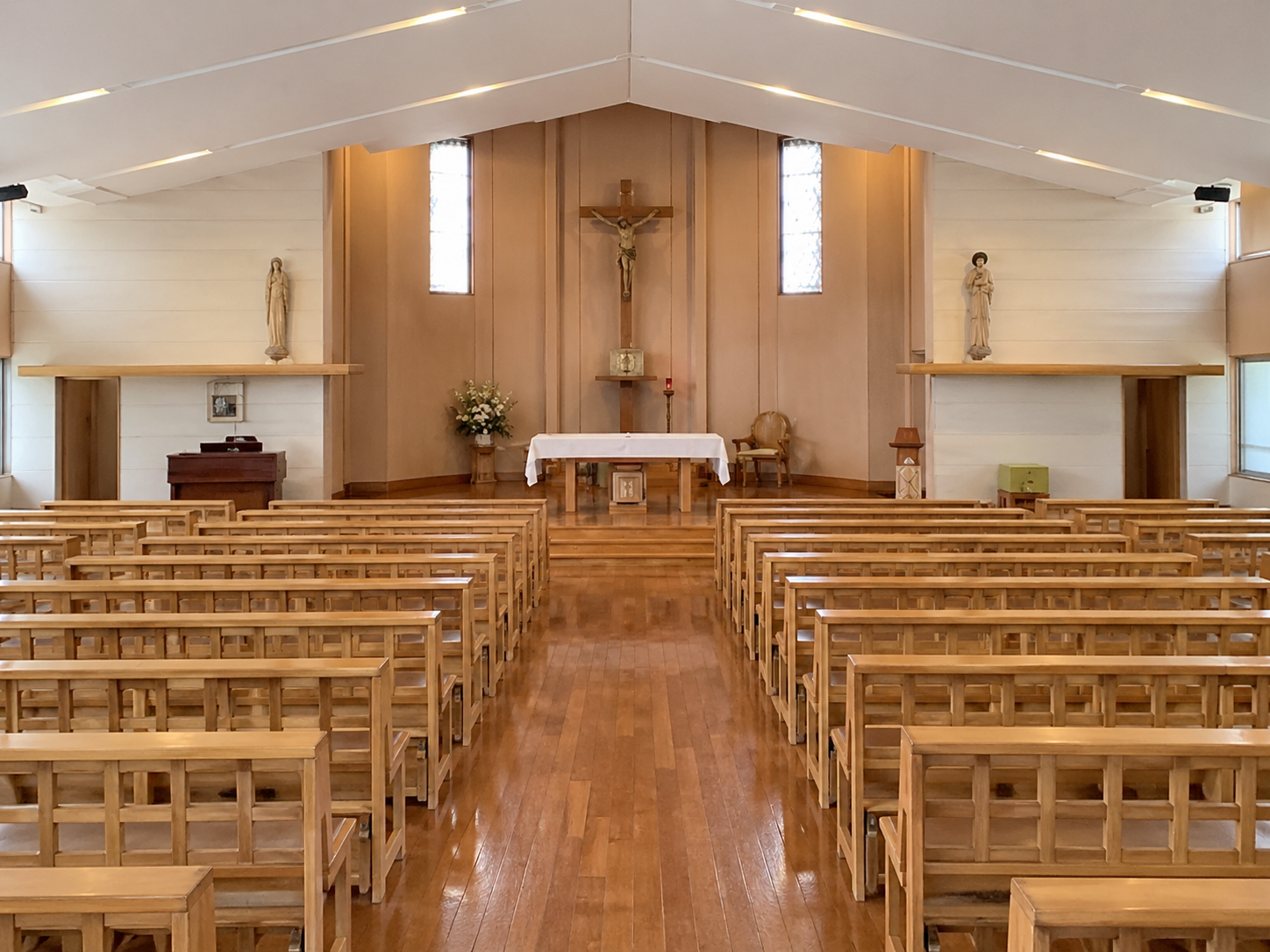
What Are Sacred Heart Goals?
More than 160 Sacred Heart sister schools worldwide, including ISSH, share a common educational philosophy called Sacred Heart Goals and Criteria.
The Foremost of Five Goals: "A Personal and Active Faith in God"
The highest principle in ISSH's education is "A Personal and Active Faith in God." This does not mean "enforcing Catholic belief," but rather fostering broader spiritual growth by cultivating "the capacity to hold one's own faith and values seriously, and to act upon them".
Welcoming Diverse Beliefs
ISSH actively welcomes students from diverse religious backgrounds, and according to official information, students represent nearly 20 unique religions, denominations, and belief systems.
Notably, during Junior School assembly, students from different religious and belief traditions lead the prayers. This is not a restrictive approach where "only Catholics may lead prayer at a Catholic school," but rather ISSH's distinctive open approach where "prayer time operates as a space that respects all faith traditions."
Graduation Requirement: The Meaning of Values 1 Unit
ISSH's high school graduation requirements include 1 unit of Values. Rather than making Theology or Bible classes mandatory, the school operates these as "values education".
Specifically, coursework includes the following topics:
- Discussion of ethical dilemmas
- Comparative understanding of diverse religions and philosophies
- Examination of social justice
- Self-discovery and community responsibility
How Multiple Faith Backgrounds Coexist
The reason ISSH is described as "a Catholic school where non-Christian families can comfortably apply" lies in the following approach:
- While placing faith at the top of Goal 1, the school does not prescribe what that faith must be
- Prayer from multiple faith traditions is implemented during Junior School assembly
- Values is the sole required unit, kept to a minimum
- Pastoral care (spiritual and psychological support) is central
- Conversion is never required
Non-Christian parents frequently comment: "Initially, the religious emphasis seemed strong, but in practice, it is an education that respects diversity while cultivating one's own values."
Comparison with Seisen
Seisen implements mandatory Religion classes, weekly Mass, and daily prayer—a more explicit Catholic education than ISSH. Families seeking deeper Catholic experience choose Seisen; those seeking to respect Catholic values while nurturing broader spiritual growth choose Sacred Heart. This distinction creates a clear choice axis for families.
For more on Seisen, please refer to the article below.
The Complete Guide to Seisen International School: Tuition, IB Results, Comparison with Sacred Heart, and Admission Strategies [2026 Edition]
8. Leadership and STEM in a Girls' School with Tradition
"Over 100 years of tradition, yet contemporary strength in leadership and STEM" — this is ISSH's distinctive character.
33 Student Council Leadership Positions and 6 Councils
ISSH's high school offers 33 student council leadership positions. The design ensures that every student holds some leadership role, rather than limiting leadership to a select few.
Specifically, each student belongs to one of the following 6 Councils:
Council | Role |
|---|---|
Academic Council | Academic initiatives and peer support |
Fine Arts Council | Arts, music, and theater activities |
Social Service Council | Community service and volunteer activities |
Sports Council | Sports programs and athletic events |
Well-being Council | Student mental health and wellness |
World Council | International exchange and global issues |
All students experience a leadership role — this is a structure unique to girls' schools, institutionally ensuring an environment where girls develop leadership confidently, without social pressure from male peers.
Robust STEM Activities — Brain Bowl, Medical Society, Math Field Day, Robotics
"Girls' schools lack strength in STEM" — ISSH challenges this stereotype with multiple STEM clubs and abundant AP STEM courses.
Club / Activity | Description |
|---|---|
Brain Bowl | Academic knowledge competition |
Medical Society | Club for students interested in medicine |
Math Field Day | Mathematics competition |
Robotics Program | Participation in VEX Robotics program |
An official comment from an ISSH parent states: "My daughter loves the robotics program, and through competition participation, her confidence has grown tremendously." This reflects not merely "it's okay for girls to do STEM," but rather the school's intentional positioning of STEM prominently.
Strength in AP STEM Courses
Among ISSH's 24 AP courses, STEM subjects include the following:
- AP Computer Science A
- AP Calculus AB
- AP Calculus BC
- AP Biology
- AP Chemistry
- AP Physics 1
- AP Physics 2
- AP Statistics
- AP Environmental Science
These courses are significant evaluation assets in university applications for STEM majors.
Why Leadership and STEM Flourish in a Girls' School
Research shows that in coeducational and boys' schools, girls are less likely to volunteer for STEM activities. At ISSH, all student council positions and all STEM club leadership roles are held by girls, creating a culture where girls naturally view "developing leadership" and "pursuing STEM" as ordinary choices.
9. Admission Requirements and Application Process
The most critical consideration in ISSH admissions is the restriction on applications from Japanese national families.
【Most Important】 Japanese National-Only Families: Grade 10-12 Only
ISSH's official Admissions Policy explicitly states the following restriction:
Applicants for Grade 9 and below must have non-Japanese nationality on either the student's or parents' side. Families with Japanese nationality only may apply for Grade 10-12 only.
This policy reflects ISSH's historical operation as a school primarily serving expatriate and international families. For Japanese permanent resident families, admission to Grade 9 and below is structurally challenging.
Grade-Level Admission Assessment
Grade Level | Assessment |
|---|---|
K3-K4 | Individual interview (specific evaluation criteria are not disclosed) |
K5 | Group or individual screening |
Grades 1-4 | Online math assessment + English reading and writing assessment |
Grades 5-12 | Math + English reading comprehension + English essay writing |
Applicants who pass proceed to a family interview.
Positioning of NWEA MAP — Benchmark Testing for Current Students
ISSH uses NWEA MAP (Measures of Academic Progress) as benchmark testing for current students in Grades 1-8. However, the school does not explicitly list MAP as an entrance examination on its admissions page.
To be precise: "ISSH is a MAP school, but publicly disclosed admissions are described as math + reading/writing + essay."
Required Documents
Documents required for application include the following:
- Passport copy
- Official transcript for current year and past 2 years (English translation)
- Recommendation letter (from current form tutor or school principal)
- Standardized test results where applicable (TOEFL Junior, Eiken, etc.)
- Medical examination report
Family Interview
After passing the written assessment, a family interview takes place. Attendance of both parents and the student is generally required. The interview evaluates the following:
Evaluation Criterion | Specific Content |
|---|---|
Academic curiosity | "What have you been passionate about recently?" "What are you reading?" |
Motivation for application | "Why Sacred Heart?" "What is your understanding of Sacred Heart Goals?" |
Family's educational values | "What values does your family prioritize?" |
Alignment with Goals | "Can the family commit to the school's philosophy?" |
Fit with school culture | "Can the family adapt to over 100 years of tradition?" |
Application Administration
- Rolling admissions (applications accepted year-round; closes upon enrollment capacity)
- Decision notification: Usually within weeks of the family interview
- Enrollment procedures upon acceptance: Payment of registration and education development fees
10. Required English Proficiency and the Reality of ELA (English Language Acquisition)
ISSH's English proficiency standards are considerably stricter than those of Seisen. This reflects the curriculum's emphasis on US high school standards and AP coursework, which demand high English language capability.
What Is ELA (English Language Acquisition)?
ELA is a support program for students whose first language is not English or whose English proficiency does not meet the grade-level standard.
Grade-by-Grade ELA Implementation
Grade | ELA Implementation |
|---|---|
Grade 1-8 | In-class support + small group lessons |
Grade 9-10 | Modified ELA or Regular ELA |
Grade 11-12 | Regular ELA only (maximum 3 years) |
Critical Constraints
The critical constraints explicitly stated in ISSH's official policy are as follows:
- Students from non-English-speaking schools are automatically subject to ELA assessment
- ELA seats in each grade are limited
- If ELA seats are full, students enter the waiting pool even if regular class seats are available
- Intermediate level of English is required from Grade 10 onwards
- ELA placement is determined by WIDA (assessment agency)
These constraints mean that teaching foundational English after admission is practically impossible. Sufficient English proficiency is required at the time of application.
English Proficiency Benchmarks
Based on ELT's ISSH placement data, the following represents the "safe zone":
Grade | CEFR | EIKEN Reference | TOEFL Junior |
|---|---|---|---|
K3-K5 | A1–A2 | – | – |
Grade 1-4 | A2–B1 | Grade 5–Grade 3 | 600+ |
Grade 5-8 | B1–B2 | Pre-2nd Grade–2nd Grade | 700+ |
Grade 9-10 | B2 | 2nd Grade–Pre-1st Grade | 800+ |
Grade 11-12 | B2–C1 | Pre-1st Grade–1st Grade | – |
Parental English Requirements
ISSH's official Admissions Policy explicitly specifies "parental English communication ability" as a requirement. All school communications, parent meetings, teacher conferences, and emergency notifications are conducted in English.
In particular, college guidance and university application support for Grade 12 graduation are entirely conducted in English. At least one family member must be able to communicate practically in English.
11. Family Interview Assessment: Alignment with Sacred Heart Goals
In ISSH's family interview, one of the most critically assessed dimensions is "understanding of Sacred Heart Goals and alignment with family values."
Articulating Goals Through Concrete Family Experiences
Successful families discuss Sacred Heart Goals not as abstract principles, but through specific family experiences and episodes.
For example, when discussing Goal 3: A social awareness which impels to action:
- × Abstract response: "We value social awareness in our family."
- ◎ Specific response: "Our child volunteered at a local community food bank for six months when she was eight years old. Through this experience, she developed a realistic understanding of poverty issues and is now leading her school's community service club."
Memorized Responses Are Unacceptable
Merely reciting memorized principles is the pattern ISSH dislikes most. The Goals are not a "formality because it is a Catholic school"—they represent the operational standards the school genuinely values. The interview assesses whether families can articulate these goals as their own lived experience.
Superficial Motivations Are Insufficient
The same applies to application motivation. Responses such as "close to home," "we prefer all-girls schools," or "English environment" are perceived as lacking respect for a century-old tradition.
Successful families structure their response as follows:
- What aspect of Sacred Heart Goals resonates with your family
- What attracts you about the school's century-long tradition and culture
- How you understand the global significance of the sister school network
- Your family's long-term commitment to the Sacred Heart alumni community
Consistency Between Parents and Applicant
The assessment also evaluates whether parents' and the applicant's responses are consistent. Misalignment—such as when parents describe a "family committed to social service" but the child's response does not reflect this—is interpreted as a lack of genuine commitment to the Goals.
In ELT's interview preparation, we conduct sessions where the entire family translates Sacred Heart Goals into the family's own language, ensuring a consistent family narrative.
12. Characteristics of ISSH-Admitted Families: ELT's Analysis
ELT has supported numerous ISSH-admitted families. From this experience, we share five characteristics common to successful applicants.
Characteristic 1: Sacred Heart Goals Are Implemented as Family Culture
Successful families can articulate how the five elements of Sacred Heart Goals (faith, intellect, social awareness, community, and personal growth) are implemented as lived family culture. Rather than reciting "prepared interview answers," they speak from what their family practices daily. Schools select families that embody these values authentically.
Characteristic 2: Serious Focus on US University Admission
ISSH is optimized for US university admission through AP-based curriculum. Families that are genuinely committed to US university admission and understand AP's academic demands align well with ISSH's curriculum. Families prioritizing Japanese top universities or considering UK, Canada, or European pathways may find Seisen a better fit.
Characteristic 3: Embrace the Century-Old Institutional Culture
ISSH, founded in 1908, has organized community structures including the three-tier parent organization (PA-PAC-Homeroom Parent), Family Festival, and Bingo Night. Families that welcome a formal environment and are willing to actively engage with the school community as parents are well-suited.
Characteristic 4: Complete English Communication Between Parent and Child
As stated in ISSH's Admissions Policy, both parents and child must be able to complete school communication in English. Particularly in upper grades, ELA seats are limited, so the child's sufficient English proficiency is essential.
Characteristic 5: Meeting Institutional Admission Requirements
For grades below 9, either the applicant or one parent must hold non-Japanese nationality. Families with only Japanese nationality who understand this institutional requirement and strategically plan their application for Grade 10-12 succeed.
Typical Admission Profiles by Year Level
Here are representative profiles of admitted students ELT has supported:
- Kindergarten new entry: International families (expatriate or mixed Japanese-foreign households) with children aged 3-5
- Grade 1-8 transfer: Third-culture kids or transfers from urban international schools. English proficiency at CEFR B1 or above
- Grade 9-12 transfer: International families or Japanese-national students entering at Grade 10 or above. English proficiency sufficient for AP coursework (CEFR B2-C1)
- Grade 12 Sixth Form entry: Graduates of international or English-focused schools. Strategic US university application plans leveraging AP credits
13. Families for Whom ISSH Is and Is Not a Fit
To be direct, ISSH is not the right school for every family. With annual tuition around 4 million yen, an advanced AP-based US curriculum, and genuine commitment to Sacred Heart Goals, families must carefully assess the alignment of their values and educational philosophy.
ISSH Is a Good Fit For:
- Families seriously pursuing Ivy League or top US private university admission — AP-based curriculum and strong US college acceptance track record
- Families seeking to deepen excellence in individual AP subjects — Individual subject depth rather than IB's required comprehensive package
- International families or those with overseas experience — Meets Grade 9 and below admission requirements
- Families attracted to a century-long tradition and institutional culture — Organized parent community, enduring alumni networks
- Families aligned with Sacred Heart Goals — Embody the five elements (faith, intellect, social awareness, community, personal growth) as family culture
- Families who value Hiroo's location — International environment, urban access
ISSH Is Not a Good Fit For:
- Families seeking IB-based inquiry-driven learning — Seisen is a better match
- Families considering multiple regional university pathways — Seisen's distributed network better accommodates this
- Japanese-national-only families applying for Grade 9 or below — Institutionally ineligible (Grade 10-12 only)
- Families unable to sustain tuition exceeding 4 million yen annually
- Families seeking depth in Catholic education — Seisen offers mandatory Religion classes with more explicit religious education
- Families unable to speak English and depend on their child to communicate with school — High risk in emergencies
Decision Framework for Families Considering Both ISSH and Seisen
If you are undecided, these five questions will clarify your direction:
- Do you seriously pursue US university admission, or do you envision multi-regional university pathways?
- Do you seek individual AP subject depth, or do you prefer IB's comprehensive balance?
- Are you drawn to institutional tradition and culture, or do you prefer a smaller, more intimate community?
- Does your family include non-Japanese national members, or is your family Japanese nationals only?
- Do you welcome Sacred Heart Goals' character education approach, or do you prefer mandatory Religion classes with explicit religious education?
If three or more of your answers lean toward ISSH, the school likely fits your family well.
15. ELT's ISSH Preparation: Comprehensive Support to Admission
ELT has supported ISSH admission across all grade levels—from Kindergarten new entry through Grade 1-9 transfer (for international families) to Grade 10-12 Sixth Form entry. We provide comprehensive support grounded in the distinctive admissions characteristics of ISSH as a US international school, alignment with Sacred Heart Goals, and English proficiency strengthening in preparation for AP coursework.
ELT's ISSH Preparation Program Features
- K5 Screening Preparation: Behavioral observation and group/individual assessment coaching, English self-expression practice
- Grade 1-4 Test Preparation: Online math and English reading/writing assessment training delivered by CELTA/DELTA-qualified native instructors
- Grade 5-12 Test Preparation: Math, English reading comprehension, and English essay writing instruction with structured essay methodology
- Family Interview Preparation: Goal-alignment interview coaching and family interview role-play grounded in Sacred Heart Goals
- English Proficiency Enhancement: One-to-one instruction targeting CEFR B2-C1 for AP readiness
- Application Documents Support: English translation of past two years' grades, recommendation letter guidance, essay editing
- Sixth Form Entry Preparation (Grade 10-12): AP course planning and US university application strategy
Families Who Choose ELT
- Families uncertain whether ISSH or Seisen is the better fit
- Families unsure how to articulate Sacred Heart Goals in their own family language
- Families seeking guidance on English essay writing preparation for Grade 5 and above
- Families considering Grade 10+ transfer but unsure if current English proficiency is sufficient
- Families aiming for US Ivy League admission through Year 12 Sixth Form entry
- Families planning to reapply after a previous admission cycle
Free Consultation
If you wonder "Will our current English proficiency and academic record meet ISSH's admission threshold?" or "We want professional guidance on K5 screening, English essay writing, and family interview preparation" or "How do we determine whether Kindergarten entry, Grade 1-9 transfer, or Sixth Form entry is the right path?", our consultants with extensive admission experience will respond to your questions individually.

![The Complete Guide to Seisen International School: Tuition, IB Results, Comparison with Sacred Heart, and Admission Strategies [2026 Edition]](/_next/image?url=https%3A%2F%2Fstorage.googleapis.com%2Felt-microcms-ai-automator-og-images%2Fcolumns%2Fseisen-international-school-review%2Fen.png%3Fv%3D1775748771897&w=3840&q=75)
![The Complete Guide to AP (Advanced Placement) [2026 Edition] | Subject List, Exam Dates, Scores, and College Credit](/_next/image?url=https%3A%2F%2Fstorage.googleapis.com%2Felt-microcms-ai-automator-og-images%2Fcolumns%2Fadvanced-placement-guide%2Fen.png%3Fv%3D1775750138179&w=3840&q=75)
